

Do Online Insurance Courses Actually Work?
If you’re planning to get your insurance license, one of the most common questions is:
“Can an online insurance course really prepare me for the state exam?”
The short answer is yes – if the course is well-designed and aligned with state requirements.
Online insurance pre-licensing and exam prep courses are built to mirror state exam outlines, provide practice testing, and help you learn key concepts efficiently. But not all courses are created equal, and understanding what makes one effective is critical to passing on your first attempt.
This guide explains how online insurance courses prepare you for state exams, what to expect, and how to choose the right program.
1. Flexible Study Schedules Improve Learning Retention
One of the biggest advantages of online insurance courses is flexibility.
Unlike traditional classrooms, online programs allow you to:
- Study early in the morning, at night, or during breaks – whenever it works for you
- Learn at your own pace instead of keeping up with a fixed schedule
- Break lessons into shorter sessions for better retention
Research and experience both show that consistent, spaced learning is more effective than cramming. Even 30 minutes a day can significantly improve comprehension over time.
For many students balancing work or family responsibilities, this flexibility is what makes completing an insurance course possible in the first place.
2. Courses Are Built Around State Exam Content
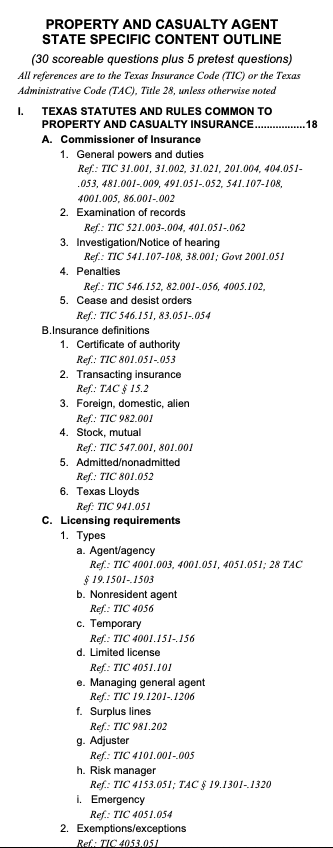
A high-quality online insurance course doesn’t just teach general insurance concepts. It is specifically designed to match your state exam. Every state publishes content outlines for every one of their insurance exams. For example, here is just a part of the state-specific section of the Texas P&C Agent Exam.
It’s worth noting that all those numbers relate back to insurance law state statutes. They are publicly available; however, working with a trusted education provider offers two major benefits:
- Saves you the massive amount of hours it would take to find, read, and learn the laws cited
- The statutes are written in complicated, legal language and often hard for a layperson to understand or translate into real-world application. Good insurance education courses do that work for you so you can focus on learning the material, not interpreting legalese.
Most courses cover:
- Insurance terms and definitions
- State-specific laws and regulations
- Policy types (life, health, property, casualty, etc.)
- Ethics and professional responsibilities
Because these topics are based on official exam outlines, you’re not guessing what to study. You’re learning exactly what topics are likely to appear on the test. This is also why it’s vital to make sure you are taking a state-specific insurance course for the line of authority/license type you want. Knowing state-specific regulations and laws can mean the difference between passing and failing.
This alignment is one of the biggest reasons online courses are effective for exam preparation.
3. Practice Exams Simulate the Real Test Experience
Practice testing is one of the most powerful tools for passing a licensing exam.
Most online insurance courses include:
- Chapter quizzes
- Full-length practice exams
- Instant feedback and explanations
These features help you:
- Identify weak areas quickly
- Get familiar with exam-style questions
- Improve speed and confidence
The key is to focus on understanding why answers are correct, not just memorizing them. This prepares you for new variations of questions on the actual exam. We recommend taking multiple practice exams with a timer set to your state’s allowed time so you mimic the actual exam deadlines and time pressures.
4. Self-Paced Learning Requires Discipline (But Tools Help)
While online learning offers flexibility, it also requires self-discipline.
Common challenges include:
- Distractions at home
- Inconsistent study habits
- Losing momentum after missed sessions
To stay on track:
- Create a dedicated study space
- Set a weekly study schedule
- Use built-in progress trackers
- Minimize distractions during sessions
Most modern platforms include progress dashboards, reminders, and study tools, making it easier to pick up where you left off and stay consistent.
5. Online Courses Build Real-World Knowledge (Not Just Test Skills)
Passing the exam is important, but it’s only the beginning of your insurance career.
A strong course will also help you:
- Understand how policies work in real situations
- Apply concepts in client conversations
- Build confidence for your first role
Courses that include real-world examples and scenario-based learning give you an advantage beyond test day. You can read more on the challenges of the insurance exam in our article “Is the Insurance Exam Hard?“
6. Key Features to Look for in an Online Insurance Course
Not every course will prepare you equally. Look for programs that include:
- State-specific content and exam alignment
- Up-to-date content and regular updates
- Unlimited or multiple practice exams
- Progress tracking, learning, and study tools
- Mobile-friendly access
- Customer support from real people (for both tech issues and subject matter questions)
These features significantly increase your chances of passing on the first attempt.
Final Answer: Are Online Insurance Courses Enough to Pass?
Yes! Online insurance courses can absolutely prepare you for state exams. In fact, most insurance carriers use online education providers like All-Lines Training and our sister company, AdjusterPro, to help their employees get licensed. But not all online courses are equal. Your course should include:
- Exam-aligned content
- Practice testing
- Structured learning paths
- Study tools
- Support
Success ultimately depends on how consistently you study and how effectively you use the tools provided.
Conclusion: A Smarter Way to Prepare for Your Insurance Exam
Online insurance courses offer a practical, flexible, and effective way to prepare for licensing exams. They allow you to:
- Study on your schedule
- Focus on tested material
- Practice with realistic exam questions
When used correctly, they don’t just help you pass, they help you start your insurance career with confidence. If you’re in the market for insurance agent licensing courses, All-Lines Training can help.